Brazil
The Disappearance of Josef MengeleBrazil is where Josef Mengele’s fugitive life entered its most prolonged phase, shifting from hurried flight across a border to years of concealment in rural São Paulo and ending with his death and burial under a false name. Its farms, private homes, and medical institutions became successive settings for an escape sustained by a network of former Nazi supporters, while the country also became the place where the evidence of his identity was finally established.
Entry into Brazil and a new identity
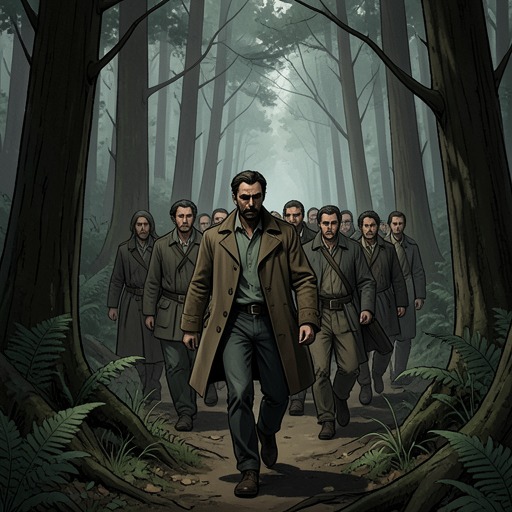
In September 1960, with Mossad believed to be closing in on his refuge in Paraguay, Mengele decided that he had to leave everything behind. Uli Rudel supplied him with a Mauser pistol and a Brazilian identity card in the name Peter Hochbichler. Mengele separated from Martha Mengele and Karl-Heinz, who returned to Europe without saying goodbye. Before leaving, he burned notes and his German passport and destroyed his Auschwitz specimens. Alban Krug and Rudel drove him by jeep to the Brazilian border at dawn; Mengele crossed into the country alone in the sense that he did not turn back to the men who had brought him there.
His arrival did not mean he had escaped the pursuit. In Brazil, he depended on intermediaries to find shelter and maintain his assumed identity. Wolfgang Gerhard, the São Paulo representative of Kameradenwerk, arranged the next stage of his journey. On 7 October 1961, Gerhard collected him in Itapecerica in a Ford Anglia and drove him away from the city toward an isolated farm near Nova Europa, about 300 kilometres from São Paulo. The owners, Hungarian emigrants Geza Stammer and Gitta Stammer, were expecting the mysterious newcomer known as Peter Hochbichler.
The Stammers’ farms and rural concealment
Mengele’s adjustment to the Stammers’ smallholding near Nova Europa was difficult. There was no telephone or electricity, and the agricultural work was demanding. He worked from dawn in the coffee fields and tended the farm animals, yet maintained habits that set him apart from an ordinary farm labourer: he used cologne before going to the fields, kept a hat on, and wore heavy boots and a buttoned-up white work garment despite the heat. His hands bore the marks of manual work, while his carefully groomed nails and repeated washing suggested a continuing concern with his appearance. After a month, Gitta agreed to keep him on.
Brazil offered him distance and hiding places, but not a settled or unobserved existence. In March 1961, a Brazilian police ambush in the small town of Mato Grosso failed to capture him. Reports that he had been arrested in Minas Gerais proved mistaken: the detained man was a former Waffen-SS member on holiday. In February 1962, military police stormed a hotel in a town near the Paraguayan border after Mengele had been reported there, but he had left that morning. These episodes show how uncertain the pursuit could be: false leads and missed encounters accumulated alongside the real danger of recognition.
Mengele later found a more protected setting at Santa Lucia Farm near Serra Negra. The farm’s position among hills, woods, and rocky ground seemed to him safer than his earlier refuges. He rarely left the property and screened visitors before the Stammers received them. The family’s children knew him as Uncle Peter, an eccentric Swiss man who was not to be photographed or discussed outside the farm. He trained a pack of roughly fifteen dogs, which accompanied him in the surrounding land, and arranged for a six-metre lookout tower to be built under the pretext of bird-watching. The tower gave him a view of the approaches to the farm; his concealment thus took the form not only of hiding, but of watching for those who might find him.
The farm’s isolation also narrowed his life. Gerhard brought him newspapers, books, medicine, and classical music records, while visitors were kept at a distance. The narrative describes recurring illness, disturbed sleep, and nightmares during his stay in Brazil, alongside carpentry, gardening interests, and writing. He began an account of his childhood and formative years intended for Karl-Heinz and Rolf. These activities did not amount to a return to ordinary life: the farm functioned as both shelter and confinement, with the same distance that protected him cutting him off from the wider world.
Pressure, relocation, and dependence on intermediaries
Brazilian concealment remained entangled with an international search. In 1960, Isser Harel planned to use the period after the capture of Adolf Eichmann to pursue Mengele, but the information available to Mossad was scattered and outdated. By 1961 and 1962, public reports and rumours magnified the fugitive into a figure surrounded by speculation, including claims that he had a private army. Such stories were not reliable evidence of his location; the documented police searches and Mossad investigation instead reveal how difficult it was to distinguish his actual movements from the stories circulating about him.
The search also crossed national boundaries. West German officials concentrated on Paraguay after learning of Mengele’s Paraguayan citizenship and believed he might be in Asunción or the Alto Paraná region. Paraguay’s president, Alfredo Stroessner, refused cooperation and maintained that Mengele had left. In 1964, West German officials publicly said that he lived in the tri-border region and often travelled to Brazil, while Paraguay continued to dispute their account. These diplomatic claims help explain why Brazil became significant to the pursuit, but the evidence here chiefly shows concealment arranged through private contacts rather than a formal Brazilian policy of protection.
Mengele’s continued dependence on the Stammers became especially clear when they planned to move. In early 1969, they relocated to a property in Caieiras, about thirty kilometres from São Paulo, and Mengele had to go with them rather than remain alone. At the new house there was no lookout tower, only a fence. He set about constructing a high wooden barrier, measuring and correcting the posts on the sloping ground, securing them, and planting shrubs and lemon trees behind it. The work repeated the logic of his earlier refuge: the home was made into a perimeter, and ordinary domestic space was adapted to the needs of a fugitive.
Illness, death, and identification
His dependence on others extended to medical care, which could itself expose him. When a serious illness eventually made a hospital visit necessary, Gerhard took him to a hospital in São Paulo. The documents presented there used a false identity and an inaccurate date of birth. The discrepancy was noticed, but Gerhard attributed it to an administrative mistake and said he would have it corrected. The episode made plain the fragility of the assumed identity: it helped preserve concealment, yet complicated access to ordinary services when Mengele could no longer avoid them.
On 7 February 1979, at a holiday home on the Brazilian coast, Mengele went into the sea while walking with Wolfram Bossert. He drowned, and Bossert brought his body back to shore. The following day, Mengele was buried in Embu das Artes as Wolfgang Gerhard. Bossert was in hospital and missed the funeral; only Bossert’s wife, the funeral director, and a crematorium assistant witnessed the burial. Brazil was therefore both the endpoint of Mengele’s physical life and, initially, the place where his death remained concealed behind another man’s name.
The burial did not settle the question of identity. In 1985, forensic pathologists examined the skeleton found in Embu das Artes and compared physical features and records, including the distinctive gap between the upper front teeth and information about a pelvic fracture. On 21 June, police in São Paulo announced that the remains were, to a reasonable degree of scientific certainty, those of Josef Mengele. DNA testing in 1992 confirmed the experts’ conclusion. In March 2016, his bones were bequeathed to Brazilian medicine and placed in the hands of forensic students at the University of São Paulo.
Brazil’s role in the narrative
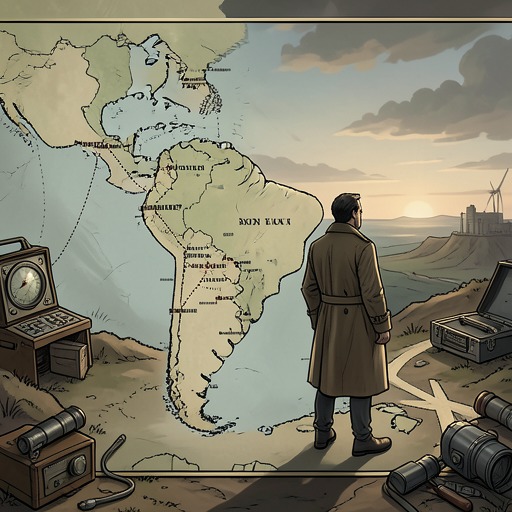
Brazil is not presented simply as a destination that ended Mengele’s flight. It is the landscape through which that flight repeatedly changed form: a border crossing arranged by allies, an assumed identity, farm labour and guarded homes, searches that missed him, and finally a burial that concealed him even after death. The contrast between the elaborate precautions of his hiding places and the ordinary institutions that later established his identity gives the Brazilian chapters their particular force. The country that served as a refuge for decades also became the site where forensic examination replaced secrecy with public identification, and where Mengele’s remains passed into medical use.